
Before You Bet, Read This 4-3-3 Breakdown
Football formations are plans for positioning players, creating passing lanes, defending space, and attacking weaknesses, not guarantees of victory. Goal Moments explains the main systems used across international football, club competitions, and the 2026 FIFA World Cup, including 4-3-3, 4-4-2, 3-5-2, 4-2-3-1, and 5-4-1. A formation contains 10 outfield players plus a goalkeeper, while substitutions, pressing height, player movement, and in-game adjustments decide how that shape actually behaves. The 4-3-3 can create width with two wingers, whereas 3-5-2 often adds central midfield control and wing-back responsibility. The IFAB Laws of the Game confirm that each team may field no more than 11 players, including one goalkeeper. Before assessing a team or placing any football prediction, identify its starting shape, note how it changes with and without the ball, and study the roles rather than trusting the formation number alone.
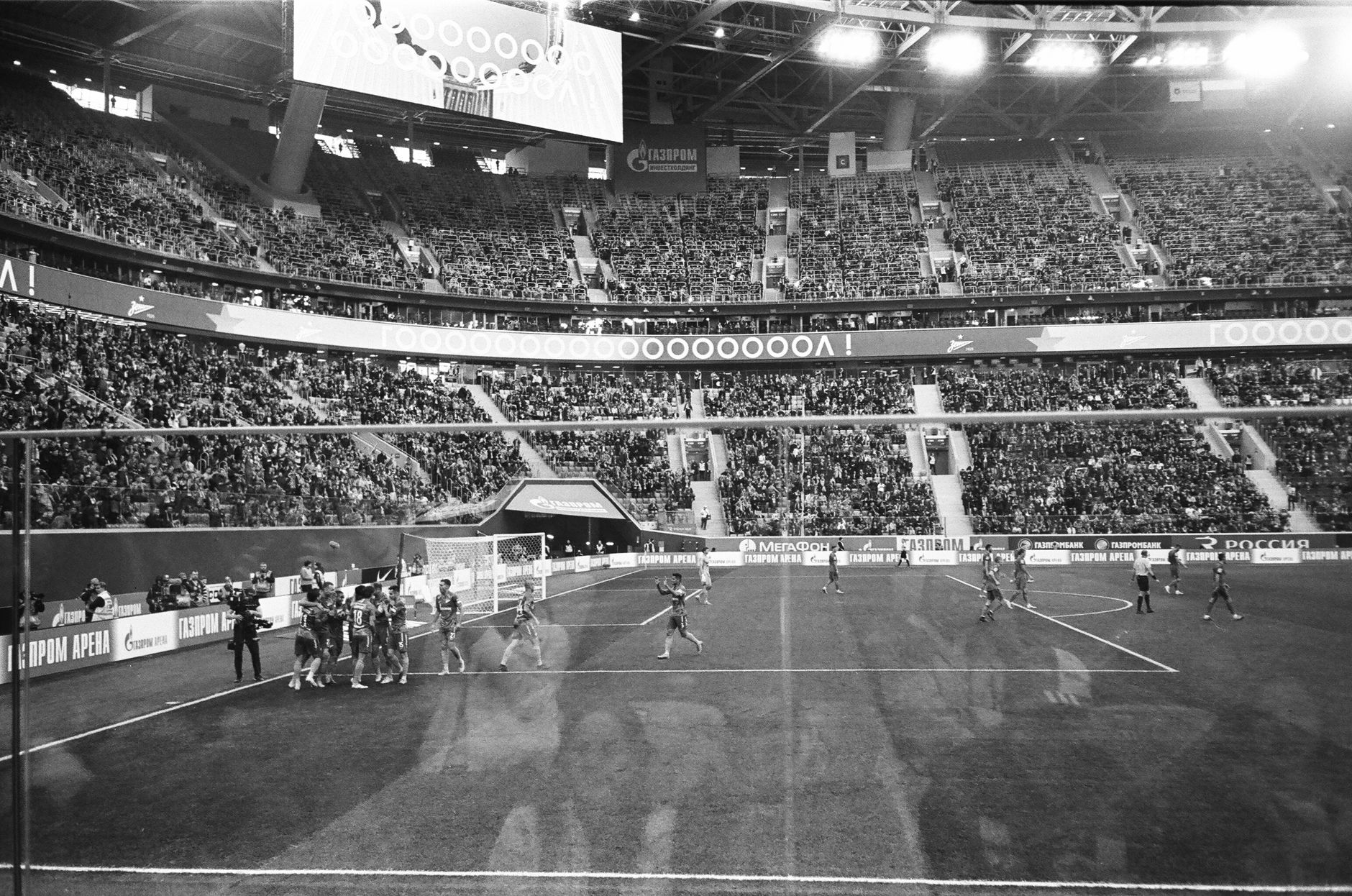
Photo by Darya Sannikova on Pexels
Want a clearer way to read match tactics? Goal Moments follows team shapes, player roles, statistics, and 2026 World Cup developments in one place.
Step 1: What does a football formation actually show?
A football formation shows the team’s intended starting arrangement, usually written with the goalkeeper excluded: 4-3-3 means four defenders, three midfielders, and three forwards. It does not describe every movement during a match, because players rotate, press, cover, overlap, and drop into different lines. The same 4-3-3 may become a 4-5-1 while defending or a 2-3-5 during sustained possession.
A formation is therefore a starting map, not a photograph of the entire match. The numbers are read from the back to the front, so 4-2-3-1 means four defenders, two deeper midfielders, three attacking midfielders, and one striker. In most tactical discussions, the goalkeeper is understood rather than written. That simple convention causes plenty of confusion for new supporters, particularly when a television graphic lists a 4-3-3 but the full-backs immediately move into midfield.
The shape has four practical jobs:
- Defensive coverage: It decides how many players protect central lanes, wide areas, and the penalty box.
- Build-up structure: It gives the goalkeeper and defenders passing options when possession begins.
- Attacking width: It determines whether wingers, full-backs, or wing-backs stretch the opponent.
- Transition control: It affects how quickly a team can attack after winning the ball or recover after losing it.
The FIFA Training Centre regularly presents tactics through player relationships rather than static numbers, and that is the sensible way to study the game. A narrow 4-4-2 with aggressive wide midfielders behaves differently from a flat 4-4-2. A 3-4-3 with cautious wing-backs can resemble a 5-4-1, while a bold 3-4-3 can pin an opponent near its own penalty area. If you only read the number on a broadcast graphic, you are looking at the least important part.
A useful beginner habit is to track three moments separately: the team’s first shape in possession, its shape after losing the ball, and its settled defensive block. Those three pictures often reveal more than the official team sheet. You can also compare these ideas with our [Internal Link: beginner’s guide to reading football tactics] before moving to detailed systems.
Step 2: How do the main football formations work?
The main football formations work by distributing defensive, midfield, and attacking duties across the pitch, but their success depends on player profiles and coordinated movement. The 4-3-3 offers width and pressing options, the 4-4-2 provides two clear defensive lines, the 4-2-3-1 protects central areas with a double pivot, and the 3-5-2 creates numerical strength around midfield and the strikers.
4-3-3: width, pressure, and midfield triangles
The 4-3-3 places four defenders behind a three-player midfield and a front three. Its biggest attacking benefit is natural width: the left winger and right winger can stay near the touchlines, forcing opposing full-backs to make uncomfortable choices. The central striker occupies centre-backs, while the midfield triangle can include a holding midfielder, an attacking number eight, and a more balanced number eight.
Teams such as Spain, Manchester City, and Liverpool have used different versions of the 4-3-3, though copying the label does not copy the football. A possession-heavy side may push both full-backs high and ask the holding midfielder to protect the centre-backs. A transition-focused side may leave one full-back deeper while the wingers attack space behind the opponent’s defence. The system can press with three forwards, but only if the midfield line moves behind them at the right distance.
The main strengths are:
- Wide attackers can isolate opposing full-backs.
- Three midfielders can create triangles around pressure.
- The front line can press the opponent’s back four.
- Full-backs can provide overlapping runs.
The main risks are just as clear. If both full-backs advance and the midfield loses the ball, the spaces beside the centre-backs can become exposed. If the wingers refuse to track runners, the team may defend with only seven or eight useful players. I have watched supposedly brilliant 4-3-3 teams collapse because the front three pressed separately rather than together. The arrows on the tactics board looked wonderful; the gaps on the pitch looked expensive.
4-4-2: simple lines and two forwards
The 4-4-2 uses four defenders, four midfielders, and two forwards. It is one of football’s most recognizable shapes because it gives a team two reasonably clear defensive lines and two strikers who can share the workload. England’s traditional teams, Atlético Madrid under Diego Simeone, and many lower-league sides have used forms of the system, although their pressing and possession methods differed substantially.
A classic 4-4-2 asks wide midfielders to defend deep and support the full-backs. One striker may drop between the lines while the other stays higher, meaning the shape is not always flat. Against a 4-3-3, the two central midfielders can be outnumbered, so the wide players often narrow to help protect the middle. That adjustment leaves the flanks open, and a capable opponent will switch play quickly.
The 4-4-2 remains useful because it is easy to explain and can suit a direct attack. One striker can challenge for an aerial ball, while the second attacks the knockdown or runs beyond the defence. However, simplicity is not the same as safety. If the midfield four stand too far from the forwards, the team becomes split into two disconnected groups. You apprentices keep admiring the neat rows; then you wonder why the ball comes straight back.
4-2-3-1: protection behind the attack
The 4-2-3-1 contains four defenders, two deeper midfielders, three attacking midfielders, and one striker. The two central midfielders, often called a double pivot, can provide passing support and defensive cover. Ahead of them, the number 10 operates between the opponent’s midfield and defence, while the wide attackers can either hold the touchline or move inside.
The system became especially common in European club football because it balances control and attacking variety. Real Madrid, Bayern Munich, and Germany have all used versions of it at different times, with very different interpretations. One pivot might remain in front of the centre-backs while the other carries the ball forward. Alternatively, both may hold their positions, giving the full-backs permission to advance.
Its central weakness is the isolated striker. If the number 10 stays too deep and the wingers remain wide, the forward can receive no support against two centre-backs. Its central strength is defensive rest shape: even when attacks fail, the double pivot may delay a counterattack. That is a detail worth watching in match analysis and not merely a line in a preview.
3-5-2 and 3-4-3: numerical strength with wing-back demands
The 3-5-2 uses three centre-backs, wing-backs, a midfield three, and two forwards. The 3-4-3 usually has three centre-backs, two wing-backs, a central midfield pair, and three attackers. Both systems create an extra central defender compared with a back four, but the wing-backs must cover enormous distances. When they retreat, the shape may look like 5-3-2 or 5-4-1. When they advance, it can resemble 3-2-5.
Inter Milan, Chelsea, and Antonio Conte’s teams have shown how effective a back three can be when the wide players understand their timing. The outside centre-backs may step into midfield, while the wing-backs stretch the pitch. Two strikers can occupy both opposing centre-backs, which makes the first defensive line awkward to manage.
The danger is obvious: if a wing-back is caught high, the outside channel behind him becomes a target. A slow centre-back may then be forced toward the sideline, opening the penalty area. The system is powerful, but it demands disciplined running, communication, and recovery speed. Do not call it “defensive” simply because it contains three centre-backs. That is lazy analysis.
To compare systems more systematically, see our [Internal Link: guide to 3-5-2 versus 4-3-3 matchups].
Want formation examples connected to real teams and tournament trends? Review the latest tactical coverage before judging a side’s chances.
Step 3: Why do formations change during a match?
Formations change during a match because football is played through possession, pressing, transitions, substitutions, and opponent reactions rather than fixed positions. A 4-3-3 may defend as a 4-1-4-1, attack as a 2-3-5, and finish a match as a 4-4-2 after a striker replaces a winger. The visible numbers change with the phase of play.
The clearest distinction is between in-possession and out-of-possession structure. Suppose a team begins in a 4-3-3. During build-up, the right-back may move beside the holding midfielder, producing a 3-2-5 with two centre-backs, one inverted full-back, two midfielders, and five advanced players. When the ball is lost, that same right-back must sprint back into the defensive line. If he arrives late, the opponent attacks the space he abandoned.
Pressing creates another transformation. A 4-4-2 defending high may send one striker toward the centre-back with the second striker screening the holding midfielder. The wide midfielders narrow, and the back four push up behind them. On paper, the side remains a 4-4-2. In practice, the distances between lines matter more than the label.
Substitutions can alter the logic completely. A manager may replace a number 10 with a defensive midfielder and shift from 4-2-3-1 to 4-3-3. A trailing team may introduce a second striker, producing a 4-2-4 or 3-4-3. A leading team may add a centre-back and defend in a 5-4-1. These changes are not automatically wise. A team that retreats too early can invite pressure for 20 minutes, and I have seen many leads disappear that way.
Use this match-reading checklist:
- Count the defenders when the opponent has settled possession.
- Identify the player creating the first passing option.
- Watch whether the wide players stay outside or move into half-spaces.
- Measure the distance between the deepest midfielder and centre-backs.
- Note the shape immediately after a turnover.
- Record substitutions and the new roles, not only the new formation graphic.
A practical information gain that many basic guides miss is that the first five to ten minutes after a tactical change often reveal whether the adjustment works. Opponents need time to recognize new marking assignments, while the changed team may still have rehearsed movements fresh in its mind. When studying a 2026 World Cup match, compare the first 10 minutes after a substitution with the preceding 10 minutes. Possession percentage alone will not tell you whether the adjustment improved control.
For more detail, explore our [Internal Link: football pressing and transition analysis guide].
Step 4: How should you compare formations before a match?
You should compare formations by examining player roles, numerical advantages, space behind the shape, and recent evidence rather than assuming one system automatically beats another. A 4-3-3 does not always defeat a 4-4-2, and a back three is not automatically more defensive. The correct question is where each team can create a free player.
Start with the central battle. A 4-3-3 midfield triangle may outnumber a 4-4-2’s central pair, but the 4-4-2 can compensate by narrowing its wide midfielders. A 4-2-3-1 may protect the centre against a 3-5-2, yet the wing-backs can overload the full-back areas. A 5-4-1 may deny central space but struggle to escape pressure because its lone forward is isolated.
Then study the personnel:
- Is the holding midfielder comfortable receiving under pressure?
- Can the centre-backs defend wide channels?
- Do the wingers track opposing full-backs?
- Can the striker hold the ball long enough for support to arrive?
- Are the wing-backs fit enough to make repeated recovery runs?
- Does the goalkeeper help create an extra passing option?
In my experience, the most important mismatch is often not the advertised formation but the weakest runner in the defensive chain. A 3-4-3 can look magnificent until an aging wing-back cannot recover against a fast winger. A 4-3-3 may appear vulnerable on paper, yet a quick full-back and disciplined number eight can close the same channel repeatedly.
Recent data should support, not replace, video or contextual judgment. Useful indicators include expected goals, field tilt, progressive passes, high turnovers, shots conceded after losing possession, and the number of entries into the penalty area. UEFA’s technical reports provide examples of how elite football is assessed through tactical patterns and match context. A team with 60 percent possession may still be losing the dangerous spaces if its possession occurs far from goal.
There is also a contrarian point worth remembering: changing formation can worsen a problem when the real issue is execution. If a team concedes from poorly defended crosses, moving from 4-3-3 to 3-5-2 may add a centre-back but not improve marking. If midfielders fail to track runners, drawing more lines on the coach’s board will not make them run harder. The best prediction is sometimes that the same shape will improve because the manager fixes distances and responsibilities.
Ready to apply the framework to a live fixture? Use the evidence first, then compare formation matchups with Goal Moments’ tournament coverage.
Step 5: Verification
Verify a football formation by comparing the announced lineup, average player positions, defensive shape, possession structure, and changes after substitutions. Official starting lineups show the intended plan, while event data and match footage reveal whether the team actually followed it. Check at least two independent sources before forming a strong tactical conclusion.
A reliable verification process looks like this:
- Confirm the starting XI: Use the club, federation, competition, or official tournament channel where possible.
- Write the expected shape: Record the likely formation before kickoff, including uncertain positions.
- Watch the opening phase: Study the first 10 minutes rather than relying on a television graphic.
- Compare average positions: Check whether full-backs are higher than expected and whether the number 10 drops into midfield.
- Review defensive transitions: Observe the shape immediately after possession is lost.
- Log substitutions: Note the role each replacement takes, not merely the position listed.
- Check the final phase: Teams often become more direct or more defensive after the 75th minute.
One useful edge case is set pieces. A team listed as 4-3-3 may defend corners with a zonal structure that resembles 5-3-2 because a winger drops beside the centre-backs. That temporary arrangement should not be recorded as the team’s open-play formation. Likewise, a full-back who steps inside for build-up does not automatically become a permanent midfielder.
The FIFA World Cup offers a useful setting for this analysis because international squads have limited preparation time. A manager may select a familiar 4-2-3-1 even when a different system appears more adventurous, simply because the players understand its pressing triggers and defensive rotations. Tournament football also magnifies fatigue, travel, injuries, and the consequences of conceding first.
When Goal Moments evaluates a 2026 World Cup fixture, the sensible approach is to separate three judgments: what the manager intends, what the players execute, and what the opponent permits. Those are not the same thing. Believe it or not — I do. If your prediction depends on a formation label alone, it is not a prediction yet; it is a guess wearing a shirt.
Troubleshooting common failures
Common formation-analysis failures include treating the lineup graphic as reality, confusing a defensive phase with the overall system, ignoring player quality, and using possession statistics without location or match-state context. Fix these errors by checking movement, role changes, pressure, and the scoreline before deciding whether a formation succeeded.
Failure 1: Assuming the listed formation never changes
Broadcast graphics are often prepared before kickoff and may be wrong within seconds. A full-back can invert, a striker can drift wide, or a midfielder can drop between centre-backs. Record the team’s shape in each phase instead of forcing every movement into one number.
Failure 2: Calling every back-three system defensive
A 3-4-3 can attack with five players in the final line and use aggressive counter-pressing after losing the ball. Conversely, a 4-3-3 can become very cautious if its wingers retreat and its full-backs stay deep. Judge the height, width, and intent of the players rather than the number of centre-backs.
Failure 3: Ignoring the opponent
A formation’s quality is relational. A 4-4-2 may look poor against a possession-heavy 4-3-3 but excellent against a narrow 4-2-3-1 if its two strikers can press centre-backs. Ask which team has the spare player and where that spare player receives the ball.
Failure 4: Overvaluing possession
Possession percentage does not show whether attacks reach the box or whether turnovers occur in dangerous areas. Track shots, expected goals, progressive passes, final-third entries, and chances created after high recoveries. Manchester City can dominate through patient circulation, while a direct team may create more threat with 40 percent possession.
Failure 5: Making a prediction without verifying absences
One injured player can change an entire formation. If a natural holding midfielder is unavailable, a 4-2-3-1 may lose its protection and become a loose 4-1-4-1. Check official injury news, suspension lists, travel information, and confirmed lineups before making a final call. For a practical checklist, visit our [Internal Link: pre-match football prediction research checklist].
Formation comparison table
| Formation | Main strength | Common weakness | Typical alternate shape |
|---|---|---|---|
| 4-3-3 | Width, pressing, midfield triangles | Space beside centre-backs | 4-1-4-1 or 2-3-5 |
| 4-4-2 | Clear defensive lines and two forwards | Central midfield can be outnumbered | 4-2-3-1 |
| 4-2-3-1 | Double-pivot protection and creative number 10 | Lone striker may become isolated | 4-3-3 |
| 3-5-2 | Central overloads and two strikers | Space behind wing-backs | 5-3-2 |
| 3-4-3 | Width with three attackers | Wide defensive channels | 5-4-1 |
| 5-4-1 | Compact penalty-area protection | Limited counterattacking support | 3-4-3 in possession |
The conclusion is simple: formations explain intentions, but roles, distances, timing, and execution explain results. Study the 4-3-3, 4-4-2, 4-2-3-1, 3-5-2, and 3-4-3 as flexible frameworks, verify how teams behave in each phase, and never confuse a pre-match graphic with the football actually being played. Goal Moments can help you follow 2026 World Cup tactics, team statistics, and match predictions with more discipline. Do that work before trusting a headline, a tipster, or your own first impression. Believe it or not — I do.
Explore the latest tactical breakdowns and approach every match with better evidence.
Frequently Asked Questions
Q: What is a football formation?
A football formation is the planned arrangement of a team’s goalkeeper, defenders, midfielders, and forwards on the pitch. A 4-3-3 contains four defenders, three midfielders, and three attackers, while the goalkeeper is understood rather than included in the numbers. The formation describes the starting structure, not every movement during possession, pressing, transitions, or set pieces. Always examine how the shape changes in different phases.
Q: How do you read a football formation during a match?
Read a football formation by watching player positions in possession, immediately after turnovers, and during settled defending. First identify the defensive line, then count midfielders, observe the wide players, and check whether a striker drops or a full-back moves inside. Compare the broadcast graphic with average positions and match footage. The most accurate reading may be three shapes, such as 4-3-3 in attack, 4-1-4-1 while defending, and 2-3-5 during build-up.
Q: What is the difference between 4-3-3 and 4-4-2?
The 4-3-3 uses three midfielders and three forwards, while the 4-4-2 uses four midfielders and two forwards. A 4-3-3 usually offers better width and central midfield triangles, whereas a 4-4-2 provides two strikers and two clearer defensive lines. The 4-3-3 can outnumber a 4-4-2 centrally, but the 4-4-2 may narrow its wide midfielders to compensate. Player roles determine the actual matchup.
Q: Is 3-5-2 a defensive formation?
No, 3-5-2 is not automatically defensive because its wing-backs and midfielders can create a five-player attacking line. The system can become 5-3-2 when the wing-backs retreat, but it may resemble 3-2-5 during possession. Its effectiveness depends on wing-back stamina, centre-back speed, midfield movement, and the relationship between the two forwards. Calling every back-three system defensive is a basic analytical mistake.
Q: How can formations help with football predictions?
Formations can improve football predictions by revealing likely overloads, vulnerable channels, pressing problems, and defensive cover. They should be combined with confirmed lineups, injuries, recent performance, expected goals, field position, and home or away context. Check how each team performed against similar shapes rather than assuming historical formation records are enough. A formation is evidence, not a guaranteed result.
Q: Why does a formation fail during a match?
A formation can fail because players leave gaps, pressing triggers are mistimed, wide players do not track runners, or the opponent creates a numerical advantage. Injuries and substitutions may also remove the player responsible for holding the shape together. Review the distances between lines and the areas where turnovers occur. Changing the formation may not solve a problem caused by poor execution.
Q: What formation is best for the 2026 World Cup?
There is no universally best formation for the 2026 World Cup because squad quality, opponent style, tournament pressure, and player availability vary by team. A 4-3-3 may suit a side with strong wingers, while a 4-2-3-1 may better protect a team with an elite number 10. Compare confirmed lineups, tactical flexibility, defensive transitions, and recent competitive evidence before judging a formation.